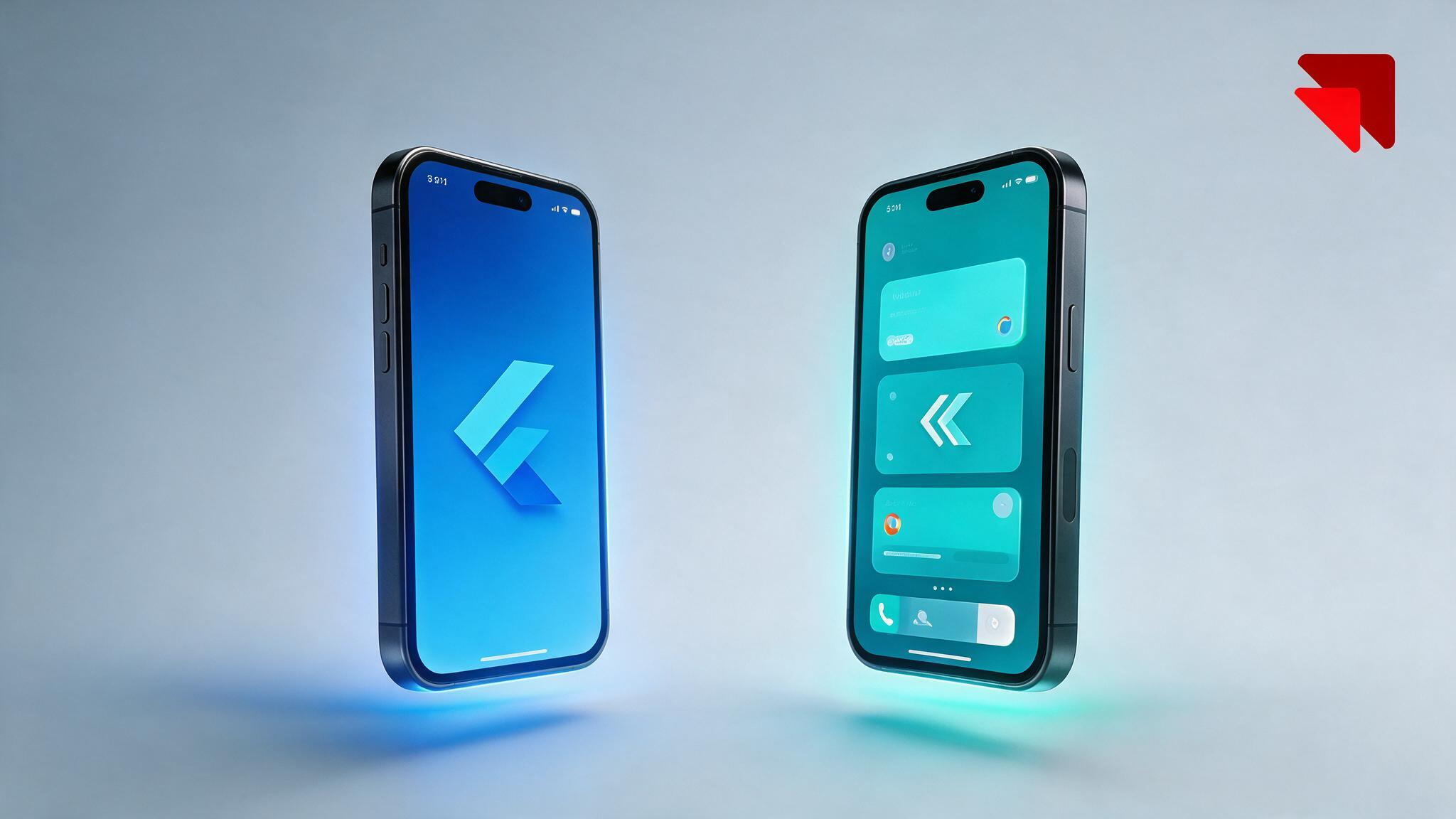
Almost every founder building a mobile app eventually lands on the same fork in the road: Flutter or React Native? Both let you build for iOS and Android from a single codebase, both are mature and widely used in 2026, and both are perfectly capable of powering a successful product. So the honest answer to “which is better” is: it depends on your situation — and this article will help you figure out yours.
Quick definitions first. Flutter is Google’s framework, using the Dart language, that renders its own UI for pixel-perfect consistency across platforms. React Native is Meta’s framework, using JavaScript and React, that renders using native UI components. That single architectural difference drives most of the practical trade-offs below.
Where Flutter tends to win
Flutter shines when you want a highly custom, visually consistent interface that looks identical on every device. Because it draws its own UI, you get precise control and smooth, expressive designs without fighting platform differences. It also performs excellently for animation-heavy or graphically rich apps. For a startup that wants a distinctive, polished look across iOS and Android without maintaining two designs, Flutter is a strong default.
Where React Native tends to win
React Native’s big advantages are talent and ecosystem. Because it’s built on JavaScript and React, you can often tap your existing web team and a massive pool of developers — which matters both for hiring and for outsourcing. It leans on native components, so apps feel at home on each platform, and its maturity means there’s a library or a Stack Overflow answer for almost everything. If your team already lives in the React world, React Native lets them build mobile without learning a new language.
The factors that actually decide it
Ignore the tribal debates online and weigh what matters for your MVP:
- Team and talent: what do your engineers (or your outsourcing partner) already know well? A team fluent in one framework will out-deliver a team learning the ‘better’ one.
- UI ambition: highly custom, brand-driven visuals lean Flutter; a clean, native-feeling standard app is comfortable in either.
- Ecosystem needs: if you depend on specific mature libraries or third-party SDKs, check which framework supports them best before committing.
- Long-term hiring: consider how easily you’ll find developers to maintain it — React Native’s JavaScript base offers a very deep talent pool.
The answer most startups actually need
For a typical MVP, the deciding factor usually isn’t the framework’s theoretical ceiling — it’s who’s building it and how fast you can ship. Both frameworks will comfortably carry you from MVP to a product with serious traction. The wrong move is agonising over the choice for weeks; the right move is picking the one your team can execute best and getting into users’ hands. You can always make a more considered platform decision once the concept is proven and the stakes are higher.
At Emveep we build production mobile apps in both Flutter and React Native — including work for clients like Raiz in Australia — so we’re not married to one framework. We’ll recommend the stack that fits your product, your timeline and your team, not the one we happen to prefer. If you’re choosing a mobile stack for your MVP, let’s talk it through.